
Project Review
We begin by reviewing the type of project, the areas being constructed or protected, available plans, project schedule, known soil concerns, and the goals for chemical soil stabilization.
Chemical Soil Stabilization
GridLock Industries LLC specializes exclusively in chemical injection soil stabilization for expansive and moisture-sensitive soils. We work with builders, developers, pool contractors, construction teams, and property owners throughout Texas and Southern Oklahoma to complete the soil stabilization step for foundations, building pads, slabs, pools, flatwork, and other concrete-supported improvements.
Focused Soil Stabilization
Expansive soils can change volume as moisture conditions change. When these soils absorb moisture, they can swell. As they dry, they can shrink. Repeated shrink-and-swell movement beneath or around construction can place stress on foundations, slabs, pools, driveways, sidewalks, patios, and other concrete improvements.
GridLock Industries LLC focuses specifically on chemical injection soil stabilization. We do not perform excavation, dirt work, grading, drainage installation, foundation piers, retaining walls, or mechanical foundation repair. Our work is centered on treating the soil itself to help reduce moisture-related expansion and contraction before or around the improvements being supported.

Our Process
Every project has different soil conditions, treatment areas, access limitations, construction schedules, and project requirements. GridLock develops the chemical injection scope around the specific site rather than using the same treatment plan for every property.
We begin by reviewing the type of project, the areas being constructed or protected, available plans, project schedule, known soil concerns, and the goals for chemical soil stabilization.
When geotechnical reports or other project documentation have been provided by the builder, developer, property owner, or project team, GridLock reviews that information as it relates to the planned chemical injection scope. GridLock does not perform geotechnical soil testing or engineering.
We evaluate the treatment area, site access, existing improvements, construction stage, and the locations where soil stabilization is required. This may involve foundations, building pads, slabs, pools, pool decks, patios, driveways, sidewalks, or other concrete-supported areas.
Based on the available project information and site conditions, we establish the chemical injection treatment area and plan how the stabilization work will be completed within the construction or property layout.
Injection locations are organized around the area requiring stabilization. The layout depends on the project, access, existing construction, and the soil treatment scope being completed.
The stabilization treatment is introduced into the targeted soil to help reduce its sensitivity to moisture changes and limit the repeated expansion and contraction associated with expansive soil conditions.
On active construction projects, the soil stabilization step is coordinated with the project schedule so builders, developers, pool contractors, and other project teams can continue with their respective phases of work.
Once the planned chemical injection scope has been completed, the treated area can move forward within the larger construction or property-improvement process. GridLock's work remains focused specifically on the soil stabilization portion of the project.
Where We Apply It
GridLock Industries LLC provides one specialized service: chemical injection soil stabilization. That same stabilization process can be used across a range of construction and property applications where expansive soil movement is a concern.

Why It Matters
Expansive soil movement can place repeated stress on the improvements built above it. Chemical injection soil stabilization focuses on reducing one of the underlying contributors to that movement: the soil's response to changing moisture conditions.
Chemical injection treats the expansive soil rather than simply addressing visible cracking or movement after it appears at the surface.
The treatment is intended to reduce the degree to which targeted expansive soils react to changes in moisture and undergo repeated shrink-and-swell cycles.
Builders and developers can incorporate chemical soil stabilization into the construction sequence before foundations, slabs, pools, and other improvements are completed.
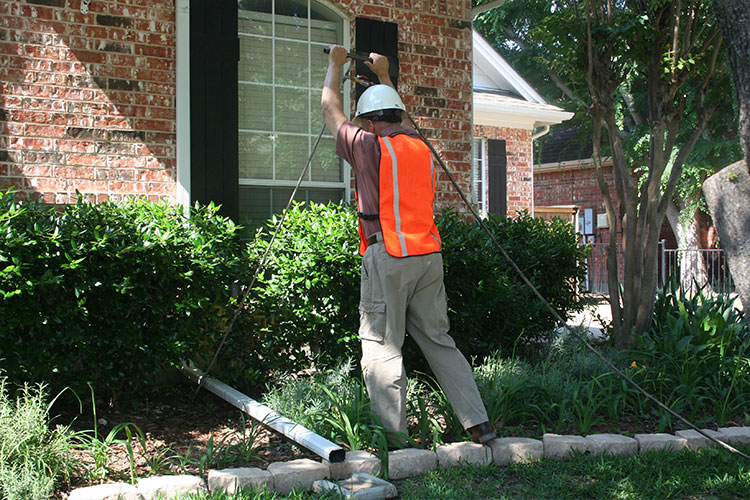
Chemical injection may also be used around existing foundations, slabs, pools, and concrete improvements where expansive soil conditions are a concern and treatment access is available.
Plan Your Soil Stabilization
GridLock Industries LLC works with developers, builders, pool contractors, construction teams, and property owners throughout Texas and Southern Oklahoma to provide chemical injection soil stabilization. Send us your available project information and geotechnical documentation to discuss the soil stabilization portion of your project.